Bitcoin ETF Regulation News Global Rules, SEC Updates, Market Impact
Bitcoin ETF regulation news covering SEC updates, global rules, and how regulatory changes impact investors and crypto mar


Cryptocurrency market has entered a new phase, and Bitcoin ETF regulation news is now one of the most closely watched topics among investors, institutions, and policymakers. As Bitcoin matures from a speculative asset into a recognized financial instrument, regulation is no longer a distant concern—it is the foundation shaping how Bitcoin is accessed, traded, and trusted.
In recent years, regulatory authorities across the world have moved from outright skepticism toward cautious acceptance of Bitcoin exchange-traded products. This shift has changed how investors interact with Bitcoin, especially those who prefer regulated environments over self-custody or unregulated exchanges. Today, Bitcoin ETF regulation news influences market confidence, capital inflows, price stability, and long-term adoption more than almost any other factor.
This in-depth guide explains the latest developments, global regulatory trends, and what these changes mean for everyday investors. Whether you are searching for Bitcoin ETF approval updates, SEC crypto regulation news, or global Bitcoin ETF rules, this article gives you the clarity you need.
Bitcoin ETFs and Why Regulation Matters
A Bitcoin ETF is a regulated investment product that tracks the price of Bitcoin while trading on traditional stock exchanges. For many investors, ETFs provide a familiar, secure, and compliant way to gain exposure to Bitcoin without directly holding the asset.
Regulation plays a crucial role because it determines who can invest, how the ETF operates, how Bitcoin is stored, and how risks are disclosed. Without regulation, Bitcoin ETFs would struggle to gain trust from institutional investors, financial advisors, and retirement funds. That is why Bitcoin ETF regulation news consistently ranks among top crypto-related searches on Google. Regulatory clarity reduces uncertainty. When rules are clearly defined, investors are more likely to participate, market liquidity improves, and volatility caused by fear or speculation tends to decrease over time.
Bitcoin ETF Regulation News in the United States
SEC’s evolving stance on Bitcoin ETFs
The United States has been at the center of global Bitcoin ETF regulation news. For years, regulatory hesitation prevented spot Bitcoin ETFs from entering the market. Concerns included market manipulation, custody risks, and investor protection. However, regulatory thinking evolved as Bitcoin markets matured and surveillance mechanisms improved.

The approval of spot Bitcoin ETFs marked a turning point. It signaled that Bitcoin had reached a level of market maturity acceptable within the existing financial framework. This decision opened the door for broader participation from institutional investors, wealth managers, and retail traders using traditional brokerage accounts.
Regulatory focus after ETF approval
After approval, regulation did not stop. Instead, attention shifted toward how Bitcoin ETFs function internally. Creation and redemption processes, custody standards, disclosure requirements, and trading transparency have all become part of ongoing regulatory refinement.
This phase of Bitcoin ETF regulation news is especially important because operational efficiency directly impacts investor experience. Lower tracking errors, tighter bid-ask spreads, and improved liquidity all stem from regulatory fine-tuning rather than headline approvals.
How Bitcoin ETF Rules Affect Investors
Regulation shapes the real-world performance of Bitcoin ETFs in several key ways. It determines how easily shares can be created or redeemed, how accurately the ETF tracks Bitcoin’s price, and how safely the underlying Bitcoin is stored. For investors, these details translate into practical outcomes. Better regulatory frameworks often mean lower trading costs, improved market stability, and higher confidence. That is why people searching for Bitcoin ETF regulation news are often also searching for Bitcoin ETF fees, tracking accuracy, and long-term investment safety.
Regulation also impacts tax treatment, reporting standards, and eligibility for inclusion in retirement accounts. These factors influence whether Bitcoin ETFs are suitable for conservative portfolios or remain primarily speculative instruments.
Global Bitcoin ETF Regulation News and Regional Differences
Europe and the rise of unified crypto rules
Europe has taken a structured approach to crypto regulation, focusing on harmonizing rules across member states. Rather than addressing Bitcoin ETFs in isolation, regulators have built broader frameworks that define how digital assets operate within the financial system.
This approach reduces fragmentation and provides clarity for issuers and investors alike. As a result, European Bitcoin exchange-traded products benefit from consistent disclosure standards and investor protections, making the region increasingly attractive to institutional capital. European Bitcoin ETF regulation news often focuses on compliance, custody requirements, and cross-border investment access. These themes are critical for long-term market development.
United Kingdom’s cautious but shifting position
The United Kingdom has historically taken a conservative stance toward crypto investment products, particularly for retail investors. However, recent regulatory discussions suggest a gradual reassessment of how crypto-based exchange-traded products are treated.
This shift reflects a broader understanding that banning access does not eliminate demand. Instead, regulators are exploring ways to allow controlled access with strong consumer protection measures. UK-related Bitcoin ETF regulation news often centers on risk disclosures, financial promotions, and suitability requirements. For investors, this signals potential expansion of regulated crypto access under clear and enforceable rules.
Asia’s regulatory innovation and structured growth
Asia plays a major role in shaping global crypto markets, and several jurisdictions have positioned themselves as regulated hubs for digital assets. These regions emphasize licensing, oversight, and institutional-grade infrastructure.
Bitcoin ETF regulation news from Asia often highlights a balance between innovation and compliance. By integrating Bitcoin ETFs into traditional financial systems, regulators aim to attract global capital while maintaining market integrity. This regional diversity means investors must pay attention to where ETFs are listed and which regulatory regime governs them.
Why Bitcoin ETF Regulation News Impacts Bitcoin Price
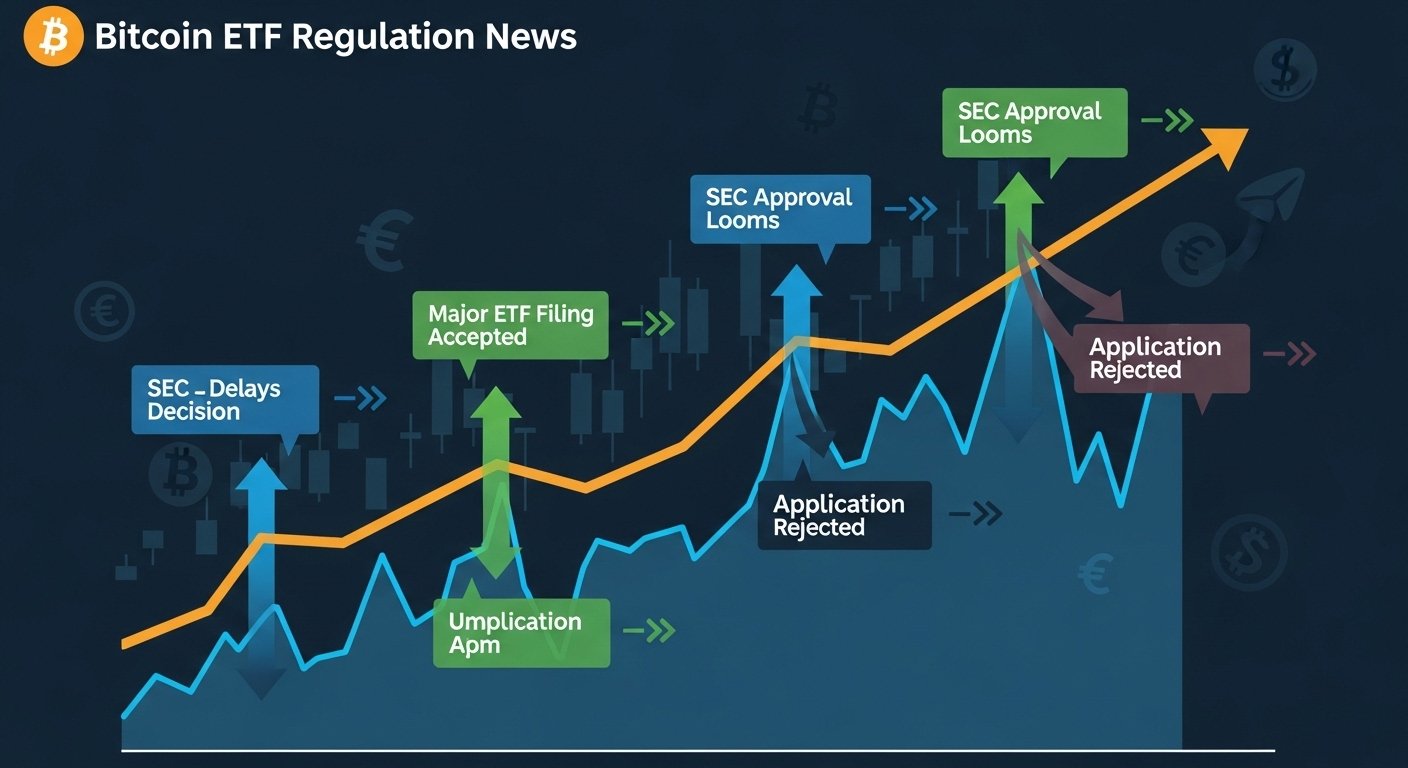
Regulatory developments frequently influence Bitcoin’s price movements. Positive regulatory signals often coincide with increased capital inflows, while restrictive announcements can trigger volatility. When investors see favorable Bitcoin ETF regulation news, confidence increases. Institutional investors are more likely to allocate capital when regulatory risk is reduced. This demand can support price growth and stabilize markets over time. Conversely, uncertainty or delays in regulatory decisions can create hesitation. Markets dislike ambiguity, and unclear rules can slow adoption even if underlying technology remains strong.
Institutional Adoption and the Role of Regulation
Institutional investors operate under strict compliance requirements. Pension funds, insurance companies, and asset managers cannot invest in products that lack regulatory clarity. Bitcoin ETFs bridge this gap by offering exposure within established legal frameworks. This is why Bitcoin ETF regulation news is often linked to institutional adoption narratives. Each regulatory milestone expands the pool of potential investors and deepens market liquidity. As institutional participation grows, Bitcoin markets may become less volatile and more resilient. Regulation, in this context, acts as a stabilizing force rather than a limiting one.
Bitcoin ETF Regulation and Investor Protection
Investor protection is a central theme in all regulatory discussions. Rules governing Bitcoin ETFs focus heavily on transparency, custody security, and accurate disclosures. Regulators require ETF issuers to clearly explain risks, including market volatility, technological vulnerabilities, and operational dependencies. This transparency helps investors make informed decisions rather than relying on hype. Strong regulation does not eliminate risk, but it ensures that risks are communicated honestly and managed responsibly. This is one of the main reasons why interest in Bitcoin ETF regulation news continues to grow among cautious investors.
Future Trends in Bitcoin ETF Regulation News
Looking ahead, regulation is expected to become more refined rather than more restrictive. Authorities are increasingly focused on aligning crypto investment products with existing financial standards. Future Bitcoin ETF regulation news is likely to address enhanced reporting requirements, improved market surveillance, and clearer distinctions between different types of crypto investment products. As regulatory confidence increases, innovation within compliant boundaries may accelerate. Investors who follow regulatory trends rather than short-term price movements often gain a strategic advantage. Regulation tends to shape long-term market structure more than daily volatility.
Conclusion
The evolution of Bitcoin ETFs marks one of the most important shifts in crypto history, and Bitcoin ETF regulation news sits at the center of that transformation. Regulation is no longer just a barrier to entry—it is the framework enabling Bitcoin to integrate into global financial markets.
For investors, staying informed about regulatory developments is just as important as tracking price charts. Rules determine access, costs, safety, and long-term viability. As regulatory clarity improves worldwide, Bitcoin ETFs are likely to become an increasingly common component of diversified portfolios. If you want to make smarter, more confident investment decisions, continue following Bitcoin ETF regulation news closely. Understanding regulation today can help you position yourself for tomorrow’s opportunities.